Professional Development Training (PDT)
Share:
Artificial intelligence is transforming internal audit, offering powerful opportunities to enhance efficiency, quality, and insight. This session provides a practical roadmap for auditors to understand, implement, and govern AI tools responsibly. Participants will explore AI fundamentals tailored to audit contexts and discover how AI can automate routine tasks, accelerate documentation, and strengthen analytical capabilities while maintaining the critical human oversight that defines audit excellence. Through live demonstrations and real-world use cases, attendees will see practical applications across the audit lifecycle. Whether you’re just starting with AI or seeking to mature your adoption, you’ll leave with actionable strategies, tools, and governance frameworks to leverage AI effectively in your organization.
Not applicable.
Not applicable.

Mark Maraccini
Partner, Crowe
Mark Maraccini is a partner at Crowe specializing in delivering risk, compliance, and internal audit solutions to governments. With more than 25 years of dedicated experience, he has supported governmental entities nationwide through internal and external audits, federal and state compliance engagements, risk management initiatives, and a broad range of advisory services. His extensive background has cultivated deep expertise in the International Professional Practices Framework (IPPF) issued by the Institute of Internal Auditors (IIA), as well as in the regulatory landscape governing higher education institutions.
Mark serves on the IIA’s International Internal Audit Standards Board (IIASB) and on the Professional Issues Committee (PIC) for the Association of Local Government Auditors (ALGA). He also contributes locally as a member of the Audit Committee for the IIA Austin Chapter. In these leadership roles, Mark consistently advances the profession through thought leadership and practical insights for the public sector. He has presented at major industry conferences, including the 2025 ACUA Conference, where he spoke on emerging risks in higher education and on AI governance audit practices. Additionally, Mark leads a quarterly webinar series in partnership with the IIA, delivering timely and relevant topics to internal audit professionals across the public sector.
Artificial intelligence is transforming internal audit, offering powerful opportunities to enhance efficiency, quality, and insight. This session provides a practical roadmap for auditors to understand, implement, and govern AI tools responsibly. Participants will explore AI fundamentals tailored to audit contexts and discover how AI can automate routine tasks, accelerate documentation, and strengthen analytical capabilities while maintaining the critical human oversight that defines audit excellence. Through live demonstrations and real-world use cases, attendees will see practical applications across the audit lifecycle. Whether you’re just starting with AI or seeking to mature your adoption, you’ll leave with actionable strategies, tools, and governance frameworks to leverage AI effectively in your organization.
Not applicable.
Not applicable.
Mark Maraccini
Partner, Crowe
Mark Maraccini is a partner at Crowe specializing in delivering risk, compliance, and internal audit solutions to governments. With more than 25 years of dedicated experience, he has supported governmental entities nationwide through internal and external audits, federal and state compliance engagements, risk management initiatives, and a broad range of advisory services. His extensive background has cultivated deep expertise in the International Professional Practices Framework (IPPF) issued by the Institute of Internal Auditors (IIA), as well as in the regulatory landscape governing higher education institutions.
Mark serves on the IIA’s International Internal Audit Standards Board (IIASB) and on the Professional Issues Committee (PIC) for the Association of Local Government Auditors (ALGA). He also contributes locally as a member of the Audit Committee for the IIA Austin Chapter. In these leadership roles, Mark consistently advances the profession through thought leadership and practical insights for the public sector. He has presented at major industry conferences, including the 2025 ACUA Conference, where he spoke on emerging risks in higher education and on AI governance audit practices. Additionally, Mark leads a quarterly webinar series in partnership with the IIA, delivering timely and relevant topics to internal audit professionals across the public sector.
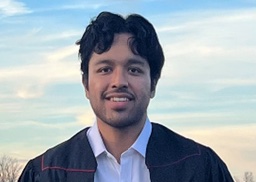
Saurav Dahal
Consultant, Crowe
Saurav is a staff at Crowe specializing in delivering risk, compliance, internal audit, and AI consulting services to public sector organizations. He has over one year of experience supporting state agencies across higher education, public service, and financial services, with a focus on strengthening governance, managing risk, and driving operational improvement.
Saurav is an early advocate for the practical application of generative AI in audit and risk functions. He helps lead AI go-to-market efforts for Crowe’s Public Sector practice, designing and implementing AI-enabled solutions that improve audit, risk, and finance workflows. He has delivered client-facing and internal demonstrations, including presentations to firm leadership and executives, and has spoken at professional organizations such as the Institute of Internal Auditors (IIA) on the use of AI in audit and risk management.
His work emphasizes responsible innovation, strong governance, and measurable impact, helping organizations adopt AI in ways that strengthen controls and deliver lasting value.
Today’s workplace brings together multiple generations, each shaped by different experiences, priorities, and communication norms. Understanding these differences can reduce workplace conflict, strengthen collaboration, and improve day-to-day communication—especially in busy accounting environments where accuracy, deadlines, and teamwork matter. While generational differences aren’t new, what is new is the pace of cultural and technological change—and the need to adapt quickly to keep teams productive, collaborative, and inclusive.
Not applicable.
Not applicable.
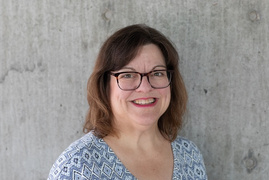
Denise Messina
Professional Development Managers, State Auditor’s Office
Denise Messina was motivated to learn the craft of public speaking when one helpful co-worker counseled her to never, ever work with the public. That insightful tidbit unknowingly led straight to her passions – public speaking and leadership coaching.
Denise has over 20 years of professional presentation experience and has coached numerous leaders in state government and business. Denise has certifications as a Zenger-Folkman Extraordinary Leader Coach, RightPath Coach, and as an MBTI Practitioner. She also has a training certificate from ATD (Association for Talent Development).
Denise Messina is a proud State of Texas public servant and currently works as the Professional Development Manager for the Texas State Auditor’s Office.
Matthew Fox
Auditor II, State Auditor’s Office
Matthew Fox is an Auditor II at the State Auditor’s office where he is responsible for evaluating internal controls and operational processes to ensure compliance, accountability, and transparency. Matthew holds a degree from Baptist Bible College and is known for a commitment to upholding high standards in public service. With a focus on accuracy and continuous improvement, Matthew approaches auditing not as a function, but an opportunity to add value and promote responsible stewardship of resources.

Heather Cuffia
Professional Development Training Assistant, State Auditor’s Office
Heather Cuffia is a Professional Development Training Assistant with the Texas State Auditor’s Office. Her work centers on supporting high-quality training initiatives while fostering a collaborative, learner-focused environment. She graduated with a Bachelor of Journalism from the University of Texas at Austin and is dedicated to informed storytelling and effective communication.
Risk Management frameworks, policies, and controls are essential to government accountability, yet audit results consistently show that risk failures are more often driven by human behavior than by technical design. Controls that appear effective on paper frequently break down when they do not align with how people actually make decisions, communicate, and respond to uncertainty. Designing Human-Centered Risk Management reframes risk management as both a human system and a design challenge. This session explores why traditional risk tools often fail in practice and how human-centered approaches can improve risk awareness, compliance, and decision making without adding unnecessary complexity.
Participants will examine how incentives, organizational culture, and control design shape behavior across government environments. The session introduces practical techniques for evaluating risk management practices through a human-systems lens and demonstrates how experiential methods can surface hidden assumptions, reveal risk culture, and strengthen strategic risk discussions.
Attendees will leave with actionable ideas for designing and refining risk controls that better reflect how work actually happens, improving both the effectiveness and sustainability of risk management in government organizations.
Not applicable.
Not applicable.

Rachel Kukucka
Executive Director, g3 Games
Rachel Kukucka is an audit, risk, and compliance professional with over a decade of experience in government agencies. Her work has focused on evaluating internal controls, strengthening governance structures, and helping organizations better understand and respond to strategic and operational risks.
Rachel currently serves as Executive Director of g3 Games, an Austin-based nonprofit dedicated to strengthening communities through tabletop gaming. In this role, she applies human-centered design principles to organizational strategy, operations, and risk management. Her combined experience in auditing, risk management, and nonprofit leadership provides a practical perspective on how human behavior, incentives, and culture influence the effectiveness of risk management systems.
Topics often involve cybersecurity gaps, data privacy compliance, access control weaknesses, and incident response preparedness. In addition, the session will address several current hot topics relevant to today’s evolving industry landscape.
This session will highlight some of the most significant issues commonly identified during IT assessments. These typically include areas where IT systems, processes, or controls may not fully align with established standards and best practices.
Not applicable.
Not applicable.
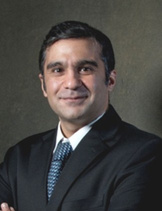
Sundeep Bablani, CPA, CISA, CITP
IT and Cyber Principal, CLA
Sundeep is a Cybersecurity Principal in the CLA National Digital group with more than 26 years of accounting and IT consulting experience. He specializes in delivering comprehensive cybersecurity and technology advisory services to a wide range of clients, including state and local government entities. His expertise spans IT audits, risk assessments, disaster recovery planning, IT security, and management oversight.
Throughout his career, Sundeep has led projects focused on evaluating and enhancing IT governance, change management, backup policies, and both logical and physical security controls. He has extensive experience conducting IT control reviews aligned with industry frameworks, performing user access and vendor due diligence reviews, and providing remediation assistance to address regulatory and third-party findings. His work also includes cybersecurity assessments, internal audit outsourcing, and serving as an outsourced Information Security Advisor.
Sundeep has partnered with numerous public sector clients, including the State of Texas, City of Austin, City of San Antonio, City of McAllen, Brazos River Authority, City of Corpus Christi, San Antonio River Authority, and San Jacinto River Authority.
He holds a Bachelor of Business Administration from Texas A&M University in College Station, Texas. Sundeep is an active member of the American Institute of Certified Public Accountants, the Texas Society of Certified Public Accountants—Financial Institutions Committee, and the Information Systems Audit and Control Association (ISACA). He is a Certified Public Accountant (CPA), Certified Information Systems Auditor (CISA), and Certified Information Technology Professional (CITP).
Public sector internal auditors are facing one of the most significant standards updates in years. The new IIA Global Internal Audit Standards introduce a principles-based framework emphasizing governance, independence, risk alignment, and quality management. Simultaneously, the IIA Topical Requirements establish mandatory guidance in key risk areas, while the 2024 revision of Government Auditing Standards (Yellow Book) updates expectations for ethics, independence, quality management, and performance audits.
This session provides a focused, practical overview of what public sector auditors need to know now. Participants will gain clarity on the key changes, understand how the frameworks align (and differ), and learn practical steps for updating charters, methodologies, quality assurance programs, and engagement documentation. The session emphasizes implementation strategies that streamline compliance while enhancing audit effectiveness and credibility.
Attendees will leave with a clear understanding of how to move from awareness to action.
Not applicable.
Not applicable.
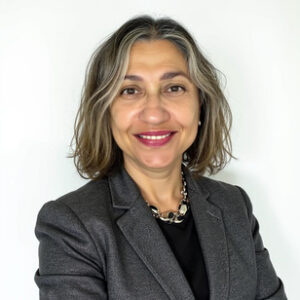
Mara Ash
CEO, BFS Strategic Partners
Mara Ash, CIA, CGFM, CMRA, CICA is the CEO of BFS – Strategic Partners, a management consulting firm focused on practical, defensible compliance solutions. With more than 28 years of experience in financial management, audit, and regulatory compliance, she has supported federal, state and local governments.
Mara specializes in helping public sector organizations design and implement compliance frameworks that align regulatory requirements with real-world operations. Drawing on experience in both the public and private sectors, she brings a pragmatic, solutions-oriented approach that strengthens accountability, transparency, and long-term sustainability.
A strong advocate for the public sector, Mara has held leadership roles with the Association of Government Accountants and currently serves as the North American Representative on the Institute of Internal Auditors Public Sector Global Knowledge Group.
Learn more about the significant role the Texas General Land Office (GLO) plays in funding education for Texas schoolchildren. Gain more insights into the complexities and results of our Royalty Audits. We will also highlight emerging issues, collaboration with other oil and gas producing States and Outreach Programs that make Royalty Audits both engaging and enjoyable.
Not applicable.
Not applicable.
Brian Raygon
Minerals Audit Director, General Land Office
Brian B. Raygon is a Minerals Audit Director with the Energy Resources Program Area at the Texas General Land Office (GLO). His division performs audits on oil and gas production reports and royalty payments received by the State and ensures they confirm with lease agreements, statutes and contracts. His teammates collaborate with attorneys, engineers, inspectors and auditees to deliver quality work products.
Brian has been an oil and gas royalty auditor since 2001 with the GLO. Brian graduated from St. Edward’s University with a BBA in Accounting and earned his MBA from Texas State University – San Marcos. He was COPAS-San Antonio Society President in 2017-2018 and ACFE-Austin Chapter President in 2022-2024. Brian has been a CFE since 2017 and is an avid long-distance runner.